José's farewell letter
Breakfast at Tiffany'sJosé's farewell letter makes a private breakup arrive as a formal document, carried into Holly Golightly's hospital room by the man who has already left her. Its polished apology names the forces behind his departure—family, reputation, and career—while its tenderness cannot undo the abandonment. Holly reads it in lipstick and dark glasses, then admits that the man who has deserted her is still the man she loved.
Delivery and Setting
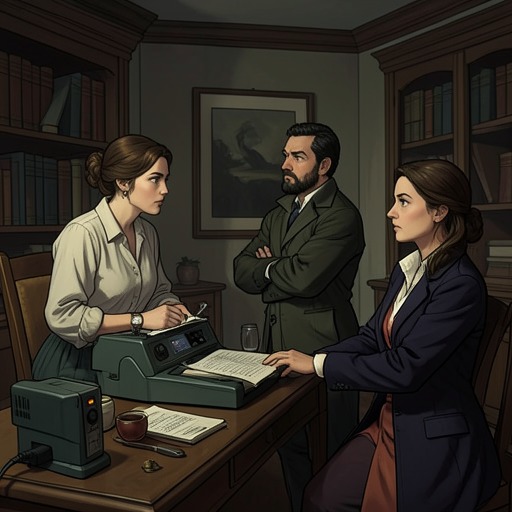
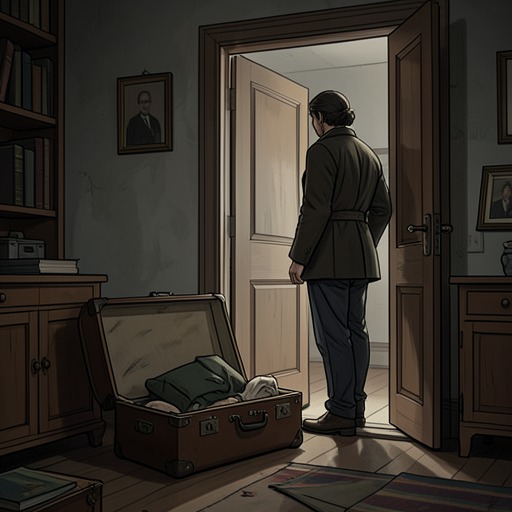
The letter reaches Holly through José's cousin, who has come to collect a suitcase. He explains that José asked him to leave the letter for José's friend, and the envelope is addressed to Miss H. Golightly with the designation “Courtesy Bearer.” Its careful formality contrasts with the intimacy of its intended recipient and the abruptness of the separation it records.
The narrator is present when the cousin hands it over. Sitting on Holly's bed afterward, the narrator holds Holly's cat and feels as badly for Holly as she could feel for herself. When asked to deliver the letter, the narrator agrees. The document thus passes through an intermediary twice: José sends it with his cousin, and the cousin entrusts it to the narrator, who brings it into Holly's hospital room.
Reading the Letter
Holly does not open the letter at once. Seeing it, she asks the narrator to fetch her purse because she will not read such a thing without lipstick. With a compact mirror, she applies powder and lipstick, colors her cheeks, pencils her eyes, blues her lids, sprays her neck with 4711, and puts on pearls and dark glasses. The cosmetics turn the act of reading into a deliberate preparation: she covers the face of a twelve-year-old girl before facing the message addressed to her as a lover and a woman in disgrace.
After inspecting her shabby manicure, Holly tears open the envelope and races through the page. Her small, stony smile grows harder as she reads. She asks for a Picayune, takes a puff, and calls the taste bad but divine; then she gives the letter to the narrator, asking that it be read aloud so she can hear it herself. She also pauses over the handwriting. The narrator sees a tightly formed, legible, unremarkable script; Holly recognizes it immediately as José's, describing its controlled appearance as buttoned up and constipated. The contrast between the neat hand and the emotional refusal becomes part of her reading of him.
José's Explanation
José opens with an intimate address, “My dearest little girl,” and says that he loved Holly while knowing she was unlike other women. The declaration is followed by the account of his despair at discovering, in a brutal and public manner, how far she differs from the kind of wife a man of his faith and career could hope to make. He expresses grief over her present disgrace and says he will not add his condemnation to the condemnation around her.
The letter asks Holly not to condemn him in return. José says he has a family and a name to protect, and admits that he is a coward when those institutions are at stake. He tells her to forget him, says he is no longer there and has gone home, and closes by wishing God's protection for Holly and her child. The language combines affection, religious address, and self-indictment, but the practical message is unequivocal: he is leaving rather than facing the public consequences of their relationship.
Holly's Response and Significance
Asked what she thinks, the narrator finds the letter honest and even touching. Holly rejects that judgment as sentimental, but when the narrator points out that José calls himself a coward and asks her to consider his point of view, she does not deny that she understands. Her face, despite its cosmetic disguise, gives away that recognition. The letter therefore produces no simple verdict: Holly can grasp why José retreats while still experiencing that retreat as a betrayal.
She distinguishes José from men she regards as worse, comparing him with Rusty Trawler and Benny Shacklett, whom she calls oversized rats. Then the defensive joking breaks. Holly jams a fist into her mouth like a bawling baby and confesses that she loved him. Her declaration confirms that the letter has not merely ended a prospect of marriage; it has exposed the attachment beneath her anger and turned the polished farewell into a scene of grief.
The other patients in the room mistake Holly's groanings for a lover's quarrel and blame the narrator, whom Holly has already teased by saying they think he wronged her. Their misunderstanding makes the narrator proud that anyone would imagine Holly cared for him, but the letter identifies José as the lover at the center of her pain. When the narrator offers another cigarette, Holly quiets, thanks him, and jokes about having frightened the police by attributing her exertion to a slap. The narrator finds this levity troubling because it skirts the seriousness of her recent troubles. Against that attempted joke, José's letter remains a hard piece of evidence: he has gone home, and Holly must face both his refusal and the disgrace surrounding her without him.